The Best Meals Are Never Only About Food
Life at the Hearth
by Sonia Vale
There are meals we remember long after we’ve forgotten exactly what was served.
We may remember the fragrance that filled the kitchen, the first bite that made us close our eyes for just a moment, or the dish someone prepared so well that years later we still find ourselves wishing we could taste it again.
But often, when we look more closely at the memory, there was something else at the table.
Someone had taken the time to prepare the meal. Ingredients had been chosen, seasoned, tasted, watched, and fussed over. Perhaps it was someone who loved us and knew exactly what would make us smile. Perhaps it was a chef we never met, whose only introduction came through the plate placed before us. Either way, there was care in the offering—the quiet satisfaction of giving someone something we hoped they would enjoy.
Then there were the people beside us.
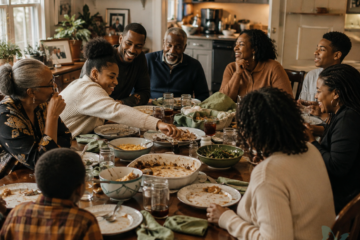
Family gathered for an ordinary dinner. Friends lingering longer than anyone planned. Two people sharing a meal so good that conversation briefly gives way to a smile across the table—a knowing glance that says, without words, You taste it too, don’t you?
Food can be like that.
It can become an emotional language.
It can welcome, comfort, celebrate, connect, and sometimes say what words cannot. Perhaps that is why the meals that stay with us are so rarely remembered for the food alone.
They are remembered for everything that came with it.
When I was growing up, food looked a little different in our home.
There were nine children living with my grandparents, and we didn’t have very much. Feeding eleven people required making the most of whatever was available, and somehow my grandmother always found a way.
She was an excellent cook.
She couldn’t read, so there were no recipes spread across the kitchen counter, no instructions telling her how much of anything to add. She simply knew. She measured by eye, seasoned by instinct, and tasted along the way until the food told her it was ready.
I spent many days watching her cook.
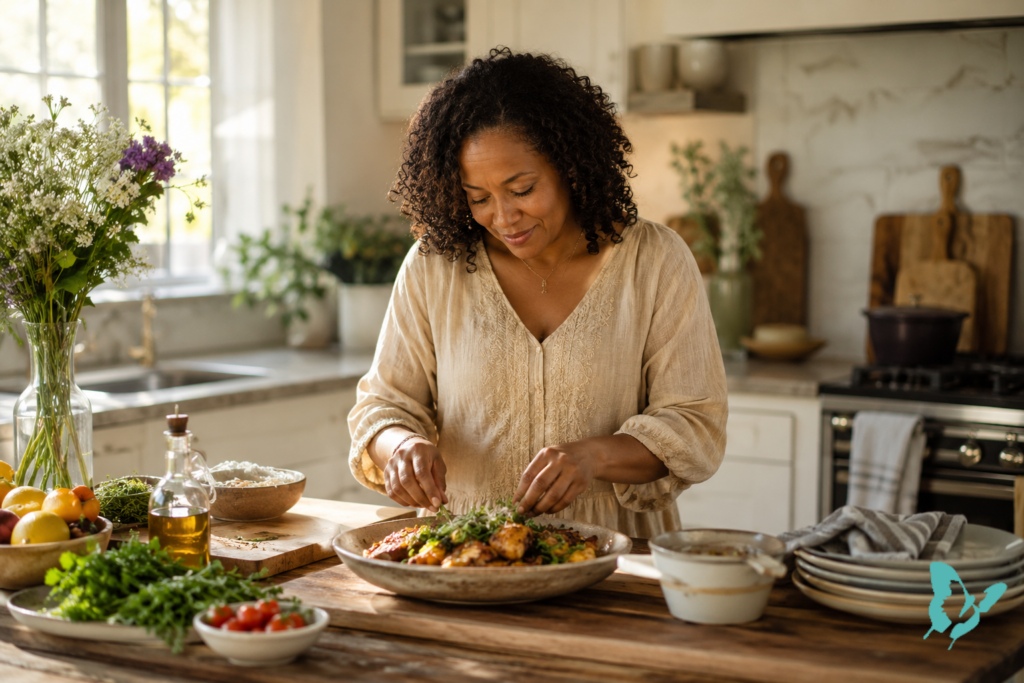
Looking back, I realize I was watching something that had very little to do with recipes. I was watching skill, certainly, but I was also watching care. She took what she had and gave the best of herself to it because there were people waiting to be fed.
There were too many of us to sit around the table together, so we ate in rotations. One group of children ate first, then made room for the next. There wasn’t much opportunity to linger. Those first seats at the table belonged, before long, to someone else.
As a child, I didn’t romanticize any of this. The table wasn’t yet the warm symbol of gathering it would eventually become for me. Much of it was simply part of a childhood that could sometimes feel rough—one more thing we children had to get through.
But memory has a way of allowing us to see things our younger selves couldn’t.
Today, when I think about those meals, I also see my grandmother standing in the kitchen—a woman who could take what little she had, measure it with her eyes, trust what she knew by taste, and somehow feed eleven people.
And now I understand something I couldn’t have understood then.
There was love in that, too.
Years later, when I had a family of my own, the table began to mean something different to me.
I wanted my children to have time there.
Time to finish their meals without feeling hurried. Time to laugh. Time to tell stories about their day and allow one conversation to wander unexpectedly into another. We blessed our food before we ate, a small tradition of gratitude that reminded us to pause before beginning.
And there was joy.
Not because every meal was elaborate or every evening perfect, but because we were together—and we knew we wanted to be.
I think that matters.
There is a difference between simply sharing a table and feeling that the people around it genuinely want to share that moment with you. Somehow food tastes better in that kind of company. The atmosphere softens. Conversation becomes easier. Even silence can feel comfortable.
Sometimes two people can enjoy a wonderful meal and hardly speak at all. One looks across the table at the other after taking a bite, and there is a smile. Maybe a raised eyebrow. Maybe a little nod.
Nothing needs to be said.
You taste it too.
For a moment, the meal itself has become part of the conversation.
Perhaps that’s one of the reasons food can be such a powerful unifier. It gives us something to gather around while making room for everything else—the laughter, the stories, the traditions, the celebrations, the comfort, the affection, and the simple pleasure of being somewhere we want to be with people who want to be there with us.
When I look back at the table of my childhood and then at the one I created for my own family, I don’t think of them as separate stories.
I think of them as pages.
Turning a page doesn’t erase what was written on the one before it. We carry those words with us. We remember. We learn. And when the page becomes ours, we have the opportunity to add something of our own.
My grandmother gave me one understanding of what it meant to feed a family.
With my children, and now my grandchildren, I’ve had the privilege of adding another.
Perhaps this is why I’ve come to believe that food is an emotional language.
It doesn’t belong only to families, and it isn’t spoken only by the people who know us best.
Care can come from a friend who remembers exactly how we take our coffee. From someone who prepares a favorite dish simply because they know we’ve had a difficult day. From a host who has thought about the smallest details before we arrive. It can even come from a chef we’ve never met, who measures, tastes, adjusts, and carefully plates a meal before sending it through the kitchen doors to a stranger.
There is something generous in that.
Someone has taken time, skill, and attention and turned them into something another person can receive.
But the food is only part of what arrives at the table.
There is the atmosphere around it. The warmth of the people sharing the space. The person who notices when a glass needs filling. The laughter coming from the other end of the table. The conversation that makes everyone forget to look at the clock. The feeling of being welcomed rather than merely accommodated.
And sometimes, there is simply the person sitting across from us.
Someone whose company makes an ordinary meal taste somehow better because we are exactly where we want to be—and we know they feel the same.
Maybe that’s why no two people would make exactly the same list of what food means to them.
For one person, it may mean family.
For another, tradition.
It might mean friendship, romance, celebration, comfort, gratitude, hospitality, memory, or simply the pleasure of gathering with people we enjoy.
And perhaps our lists change as we do.
Mine certainly has.
I once knew a table as a place where we ate in rotations because eleven people needed to be fed.
Later, I knew another table where my children could linger, laugh, talk, and bow their heads with me in gratitude before we began.
Now there are grandchildren adding their own memories to the story.
And somewhere inside all of those tables is still my grandmother, standing in her kitchen, measuring by eye.
The page turned.
But she came with me.
Perhaps that is what happens with the traditions that matter most. We carry what was given to us, decide what we want to nurture, add something of ourselves, and eventually make room for another generation to do the same.
I think about the care that prepared it.
The people who shared it.
The feeling surrounding it.
And the memories that remained when the meal was over.
Your list may look nothing like mine.
I hope it doesn’t have to.
But perhaps sometime soon, when you’re sitting across from someone you love, laughing with friends, welcoming someone into your home, or simply enjoying something another person took great care to prepare, you’ll notice what else is being served alongside the food.
Maybe you’ll recognize your own list beginning to form.
Because the best meals are never only about food.
They are about everything we bring to the table…
and everything we carry away from it.