I Can Carry This
But Do I Have Room?
Life at the Hearth
by Sonia Vale
There have been many times in my life when I’ve said some version of those words and been completely right.
I could carry it.
The problem was that I hadn’t stopped to ask whether I had room.
Those are not the same question.
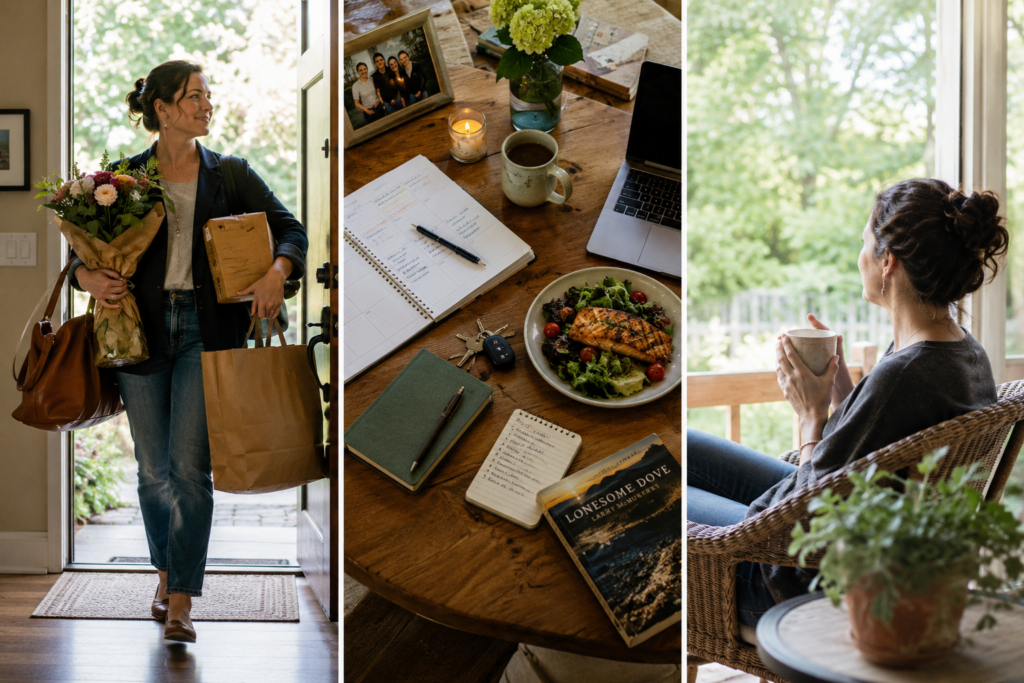
When we’re deciding whether to take something on, we often look directly at the thing being asked of us. Do I know how to do it? Do I have the time? Is it important? Am I willing? Can I help?
And sometimes the answer really is yes.
Sometimes it’s something we genuinely want to do. An idea excites us. An opportunity appears. Someone we care about needs our help. A responsibility feels important. Or perhaps we’re simply capable, and doing it ourselves seems easier than explaining it, delegating it, or waiting for someone else.
So we say yes.
What we don’t always do is turn around and look at everything that was already in the room before that yes arrived.
Existing responsibilities. People we love. Work already underway. Things we’ve promised ourselves we would finish. Sleep. Meals. Movement. Quiet. The ordinary maintenance of a human body and a human life.
None of those things disappears because something new has arrived.
And yet, for much of my life, when I discovered that everything no longer fit, I knew where I could steal a little more room.
From myself.
Rest could move.
Proper meals could become whatever was quickest.
The care I needed could wait until everything more pressing was finished.
And for a while, that arrangement could even appear to work.
The commitment was being met. The work was getting done. The person I had promised to help was being helped.
See?
I could carry it.
Except capacity has a way of telling the truth eventually.
When I had borrowed enough from myself, patience was often the next thing to become scarce. First patience with myself, and eventually the effects could reach the people and responsibilities around me.
That’s the part I understand differently now.
The question was never simply whether I was strong enough, organized enough, skilled enough, or willing enough to carry one more thing.
The better question was:
What is already occupying the space from which I am saying yes?
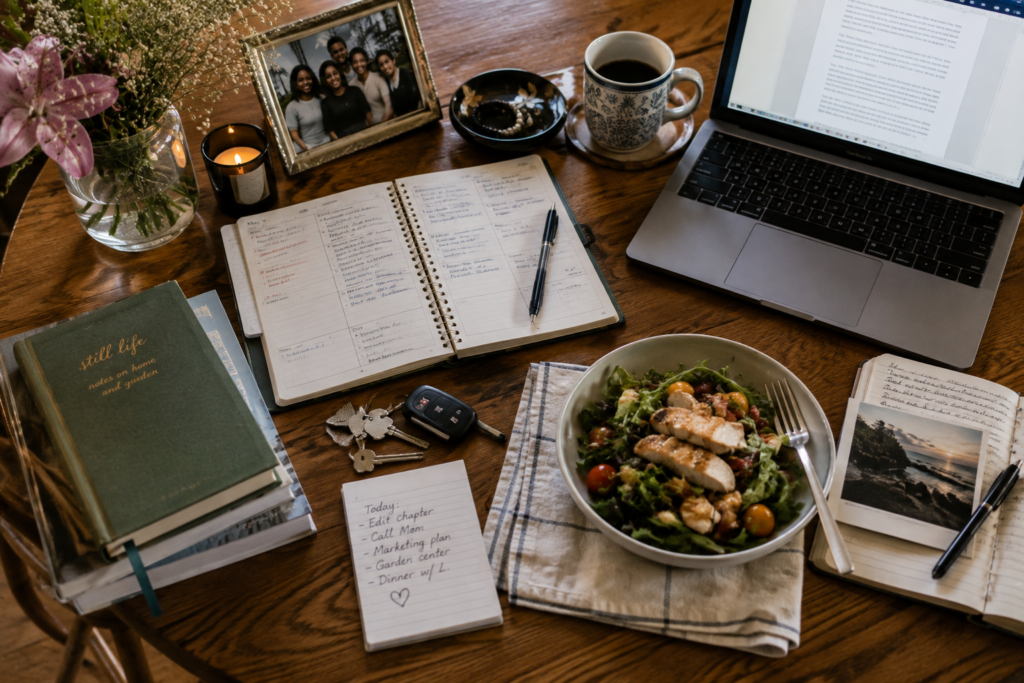
A full life is not necessarily a life that needs fixing.
These days, many of the things filling mine are there because I want them there. Family. Friends. Work I care about. Relationships I’ve chosen. Things that bring me joy. Caring for myself.
That last one has taken some learning.
I am much better now at recognizing that I belong somewhere near the beginning of that list. Eventually, perhaps, I won’t need a list at all. Caring for myself will simply be part of how I understand what my life requires.
But I’m still learning.
Rest, for example, can be surprisingly easy to treat as negotiable.
So can nourishment.
They don’t always arrive with deadlines. They don’t send invitations or wait for an answer. There is no meeting reminder announcing that my body needs an evening without another obligation.
And an empty hour on a calendar can look remarkably like available capacity.
It isn’t always.
Sometimes that hour already belongs to rest.
Sometimes it belongs to dinner eaten without rushing.
Sometimes it belongs to someone we love—or simply to enough quiet that when we are with the people we love, we actually have something of ourselves left to give them.
I think that’s one of the things I’m still learning about capacity: something doesn’t have to look productive to be occupying necessary space.
Rest takes room.
Relationships take room.
Caring for a body takes room.
Joy takes room.
Even margin takes room.
And none of that means our lives are overcrowded.
Sometimes it simply means they’re full.
The trouble begins when we mistake fullness for vacancy because some of what fills our lives cannot be checked off a list.
That’s when I can carry this becomes especially seductive.
Because perhaps I can.
But if carrying it requires me to remove something that was quietly keeping me well, then the question has changed.
It is no longer:
Can I carry this?
It is:
What will have to stop being carried if I do?
Recognizing that we’re carrying too much doesn’t necessarily tell us what to put down.
That’s the next decision.
These days, I try not to make that decision from the same exhausted place that finally sounded the alarm. If I can, I rest first.
Then I make a list.
Nothing particularly profound happens next. I simply try to tell myself the truth.
What actually needs to be done?
What can wait?
What do I want to do rather than need to do?
And if I want it, how much do I want it compared with everything else asking for room?
If another person is depending on me, I consider that too. I may decide that their need deserves a higher place on the list. But even then, I try to be more realistic about what my yes will require.
Somewhere in that calculation, I have learned to include myself.
Not automatically at the bottom.
Not as whatever is left after every other obligation has received its share.
As part of the equation.
Sometimes the answer is still yes.
Sometimes the answer is no.
And sometimes the answer is simply:
Not now.
That doesn’t mean those decisions always feel comfortable.
When another person is involved, guilt can still arrive. There can be a moment when I wonder whether I should have found a way, stretched a little farther, made one more thing fit.
But perhaps feeling guilty doesn’t necessarily mean we’ve made the wrong decision.
Sometimes it simply means we care about something we still don’t have room to carry.
I’ve learned that putting something down gives something back.
Sometimes it gives me time.
Sometimes rest.
Sometimes it gives me the opportunity to do something else that matters more.
And sometimes, perhaps most importantly, it gives me myself.
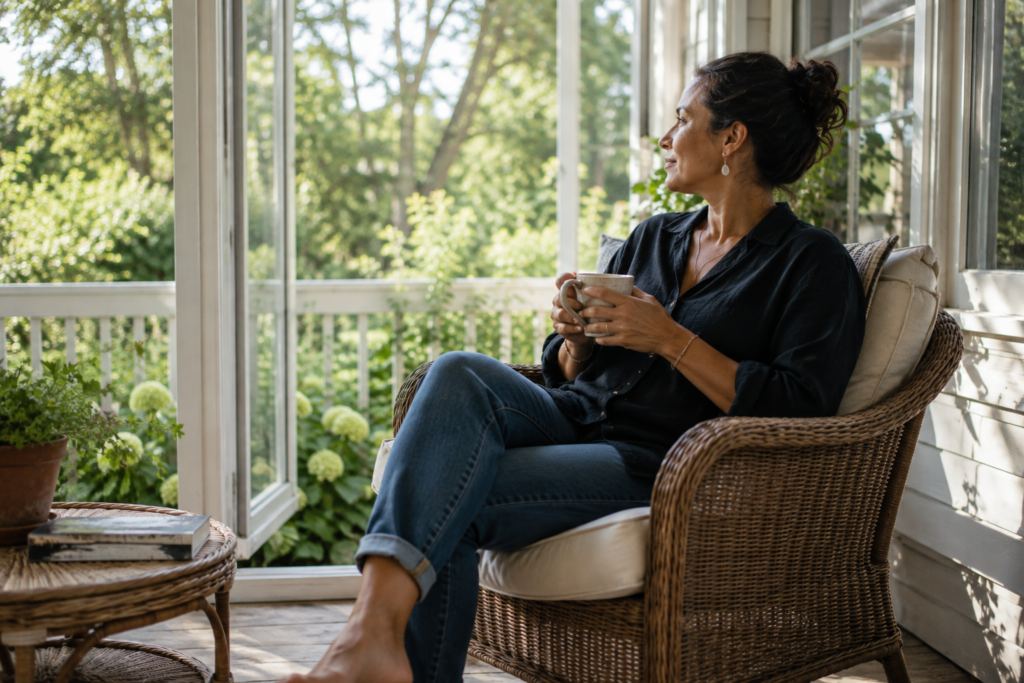
I am still learning this.
There are times when I recognize the warning early, and times when I find myself already halfway down the road before that familiar inner voice says, This isn’t going to fit.
I used to be much better at ignoring that voice.
Now I try to listen.
Sometimes that means stopping before I begin.
Sometimes it means looking honestly at everything I’m carrying and deciding what can wait.
And sometimes it means realizing, somewhere in the middle, that I have changed my mind.
Wait. I want to get off.
There is something freeing about learning that awareness does not have to arrive on time to be useful.
We don’t have to catch every overcommitment before we make it. We don’t have to become perfect judges of our own capacity. We don’t have to turn self-care into one more thing we’re supposed to get right.
We can notice.
And when we notice, we can respond.
Maybe we rest before deciding what comes next.
Maybe we make the list.
Maybe we ask what needs to happen and what merely wants to happen.
Maybe we disappoint someone a little.
Maybe we disappoint ourselves.
Maybe we decide that something good, worthwhile, exciting, or deeply wanted still has to wait.
None of that necessarily means we weren’t capable of carrying it.
That’s the distinction I wish I had understood sooner.
Capacity isn’t only a measure of strength.
It is also a measure of room.
And room includes the things that are easy to overlook because they don’t always announce themselves as responsibilities: sleep, nourishment, relationships, quiet, joy, recovery, and enough margin to remain present inside our own lives.
So these days, when that old thought appears—
I can carry this—
I try to let another question follow before I answer.
But do I have room?
And if the answer is no, perhaps putting something down isn’t evidence that I couldn’t carry it.
Perhaps it’s evidence that I’ve finally learned to count myself among the things already worth carrying.